10 simple ways to answer "Why Bitcoin?"
10 factual (and brief) reasons why bitcoin is a safe investment & why it will succeed.

There will only ever be 21 Million:
This is the simplest support point for bitcoin. Its scarcity and certainty of supply makes it the hardest monetary asset in existence compared to other commodities, metals or fiat. Just a little understanding of what give a monetary asset its value, will show that scarcity and a limited supply gives it greater value vs. more inflationary assets (i.e. US Dollars). Over the long arc of time, people have always flocked to the scarcest form of money from beads/stones/shells to gold vs. silver/copper to the British Pound / US Dollar vs. other fiat currencies.
Two great books which cover all the properties that give a monetary asset its value and much more, are “The Bitcoin Standard” and “The Bullish Case for Bitcoin”. The shorter / original article for the latter can be read here - "The Bullish Case for Bitcoin".
Adoption is real and is continually increasing
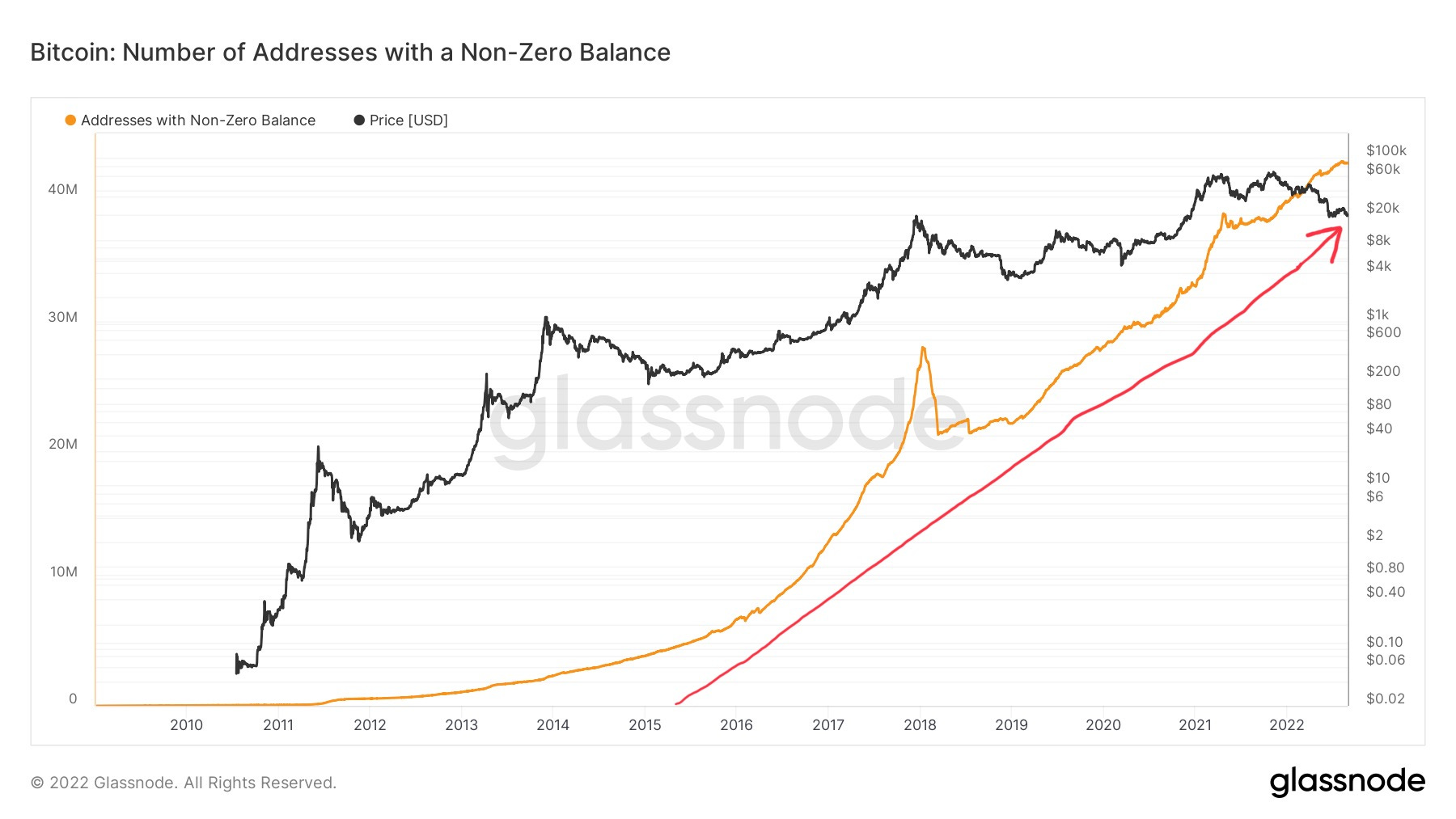
Since 2011, addresses holding some amount of bitcoin have been increasing exponentially.
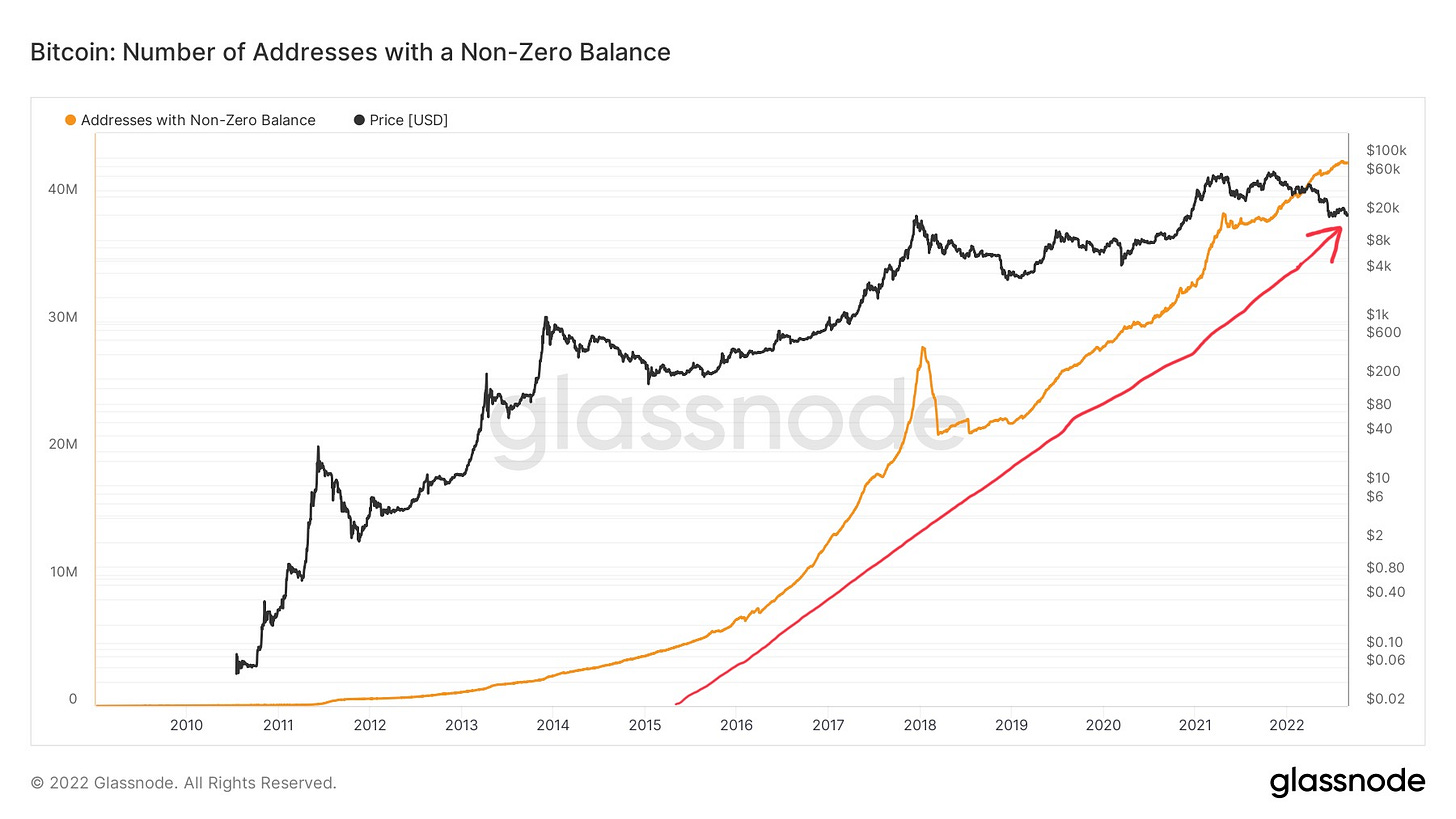
According to a survey by NYDIG, approximately 22% of U.S. adults own some amount of bitcoin. Globally, the number is estimated to be lower, in the 1-3% range, but growing rapidly. For an in depth look into user adoption of bitcoin today and into the future, check out Blockware Solutions’ "Bitcoin User Adoption Report: 2022".
Every few days there is a new institution, company, high net worth individual and/or government that announces their own adoption or belief in the future/power of Bitcoin. The number of which dwarfs those occurrences in the opposite direction.
It is completely decentralized and requires zero trust
At its core, Bitcoin cannot be changed or stopped. This is what creates a strong level of confidence for people to begin adopting it in the first place. The technology and code behind Bitcoin prevents any one person or group from ever taking control of the network, changing the supply of bitcoin or rules of the network. This creates an inherent belief that bitcoin will act as a proper store of value over the long term.
Fidelity Investments details this on pages 5-8 of their paper "Bitcoin First: Why investors need to consider bitcoin separately from other digital assets"
For a longer read on proof of work (POW), the term for the technological process that powers and secures the Bitcoin network, read the book “Inventing Bitcoin”, a free online version can be found here.
It is globally accessible, which means two things
First, for the greater world as an investment, there is a significant total addressable market (TAM) vs. a more limited group of people. For any investment, this is only a good thing, the larger the market, the larger the upside.
Second, and arguably more important, it is a freedom technology. Allowing the majority of the worlds population that lives under an autocratic or hyper-inflationary regime the opportunity to take their financial future/control into their own hands. This will continue to be a significant driver of demand moving forward. For first hand accounts of how Bitcoin has positively impacted the lives of many people, watch this panel from Bitcoin 2022 conference.
Longer term price appreciation is a big incentive for adoption
While freedom from manipulative institutions, governments or inflationary monetary policy is a strong incentive to adopt or invest in bitcoin, the increase in value over time is incentive enough for many.
12 years ago, bitcoin was $0.06 cents, today it is above $20,000. A +333,333% increase. Here is the approximate price of bitcoin on September 1st for the past 12 years:
2010 - $0.06
2011 - $8.22
2012 - $10.87
2013 - $130.07
2014 - $475.35
2015 - $230.60
2016 - $598.69
2017 - $4,635.55
2018 - $7,193.42
2019 - $9,630.59
2020 - $11,512.54
2021 - $49,341.85
2022 - $20,093.22
There are years where the price of bitcoin drops, but they are outliers. Given the level of adoption is only increasing, it can be safe to assume the price appreciation of bitcoin will return. In times when bitcoin price drops, like today, it can be bought at value levels.
The risk/reward profile is worth the investment
Even after all of this, if you still have more doubts than not, the risk/reward profile of investing in bitcoin leans reward.
If you have an an investment portfolio of $1,000 in traditional stocks/S&P500 (60%), bonds (30%) and cash (10%), etc… then it will have grow at an annualized rate of approximately 7.9% a year, over the last 10 years (according to macrotrends.net). However, bitcoin has grown at an annualized rate of over 200% the last 10 years. Yes, it is a volatile asset year over year, but that is because it is an emerging monetary asset. However, the long term performance of bitcoin cannot be questioned.
If 1% of your investable assets are put into bitcoin and it goes to zero, you are really no worse off than before. However, if adoption continues and price appreciation follows historical performance, then you have an asymmetric investment to the upside as part of your portfolio. As an investor, you re doing yourself a disservice not to consider bitcoin as part of your allocation.
There is no right number to invest in bitcoin. Only a wrong number, zero.
There is a lot of historical precedent for the replacement of monetary assets
There are many examples of a monetary asset replacing another over the course of history. While we have lived only during a time dominated by fiat currencies and it is hard to imagine anything else, historic precedent states it will not remain this way. Over time, all technologies are replaced with something better, faster, cheaper and more secure. The horse with the car, a quill with a pen, swords with guns, candles with light bulbs, wood with steel, Blockbuster with Netflix, Gold with Fiat.
These are obviously just a few examples but zoom out and it is non-stop.
Money is just another form of technology used to exchange value between different entities. Over time, the slower, less durable, less portable, less transferable, weaker form of money (or technology) has always been replaced. We have been and continue to evolve from an analog world (offline) to a digital world (online), only in a more expedited fashion.
“The Bitcoin Standard” provides an in-depth read into the rise and fall of preeminent assets that were used as stores of value and mediums of exchange and why, from early civilizations through today.
Bitcoin is backed by energy, through proof of work
This may be the most complicated support point. Simply put, proof of work is the process for which the Bitcoin network operates, is secured and the bitcoin asset is produced (mined).
POW and its underlying rules are powered by code that cannot be changed unless 51%+ of the network agrees. As time has gone on this has become virtually impossible, as the network (number of nodes) has become enormously vast and decentralized.
This process of mining bitcoin, approving transactions and minting the next “block” requires a cost, which is energy. Miners use energy to power computer hardware and software (mining ASICs), which expeditiously and continuously guess unique 256 bit number values over and over until one lower than a unique and predetermined target value is hit. POW does not include some complex calculation system or the solving of difficult algorithms. It’s just software guessing numbers over and over and over, very quickly.
The absolute number of combinations is equal to the estimated number of atoms in the known universe. Which is one reason why the Bitcoin network has never been hacked. Once this “target” value number is hit by one of the miners, they get to “mine” the next Bitcoin block, which happens approximately every ten minutes and includes all the latest bitcoin transactions on the network. They receive a “bitcoin reward” for securing the network and proving they expended a cost (work) in the process.
So when someone tells you “bitcoin isn’t backed by anything”, know that this is not true. It is backed and secured by energy and proof of work.
For a deeper understanding of this process, I recommend watching "Explaining Bitcoin Mining Simply with D++"
For a longer read on proof of work (POW), read the book “Inventing Bitcoin”, a free online version can be found here.
The fear, uncertainty and doubt (FUD) is disputable
“Bitcoin uses too much energy”- according to the Bitcoin Mining Council , the mix of sustainable energy (clean or wasted) used to mine bitcoin is estimated to be at 60% and growing. Many of the headlines and media coverage of this topic is at worst, false and at best, misunderstood. Watch this discussion from Bitcoin 2022 for more on the realities of bitcoin mining. Finally, minutes 40:25 - 48:00 of this documentary, "The Great Reset", is a phenomenal and succinct overview of bitcoin mining and energy use in the world today.
“Bitcoin is used for illicit/criminal activity” - from Forbes Magazine, “The majority of cryptocurrency is not used for criminal activity. According to an excerpt from Chainalysis’ report, criminal activity represented 2.1% of all cryptocurrency transaction volume (roughly $21.4 billion worth of transfers). In 2020, the criminal share of all cryptocurrency activity fell to just 0.34% ($10.0 billion in transaction volume). According to the UN, it is estimated that between 2% and 5% of global GDP ($1.6 to $4 trillion) annually is connected with money laundering and illicit activity. This means that criminal activity using cryptocurrency transactions is much smaller than fiat currency and its use is going down year by year.”
“Governments are going to ban Bitcoin” - The short answer is no. This was more of a concern in the past, when the primary use of cryptocurrency was illicit, highly speculative and lacked mainstream adoption. As Bitcoin has grown and others have had time to understand it more, it has gained the support of global populations, investors, institutions, corporations and government officials. In fact, both chairmen of the SEC and Federal Reserve have explicitly said they will not ban Bitcoin under their jurisdictions here and here. These statements were made just before the recent launch of two U.S. Bitcoin based futures ETFs $BITO and $BTF. The more intertwined Bitcoin becomes with the global economy and financial network, the harder it will be too undo. We are arguably already there.
“Bitcoin will be changed or replaced by another cryptocurrency” - Bitcoin’s sole purpose is to act as a peer-to-peer monetary system with a limited and unchangeable supply of 21MM, if it were to change then it would no longer be Bitcoin. For example, in 2017 Bitcoin Cash (BCH) was created in an effort to add more transactions to occur more quickly using the same Bitcoin protocol, but “forking” away from Bitcoin (BTC) the network and thereby creating a whole new currency. The adoption rate and price appreciation has proven no comparison to Bitcoin (BTC) in the following years. Other digital currencies like Litecoin, Monero and Z-Cash have been created to address both similar and different issues, yet, Bitcoin will always remain at an eventual 21 million supply. There were attempts to create digital cash before Bitcoin that failed and many afterwards that have failed as well. Other cryptocurrencies exist for purposes other than providing a store of value, and they may ultimately succeed, but they will not replace Bitcoin as the popularly adopted store of value. Lyn Alden’s covers the history of Bitcoin, why it has survived and why it may evolve to become a medium of exchange in the future here.
There are many other fears and doubts that surround bitcoin, most of which have come and gone as time has past.
Bitcoin IS an inflation hedge against monetary supply expansion
Bitcoin has been criticized for not acting as the “hedge against inflation” that many have claimed it is, given consumer prices are rising rapidly and the price of bitcoin is falling.
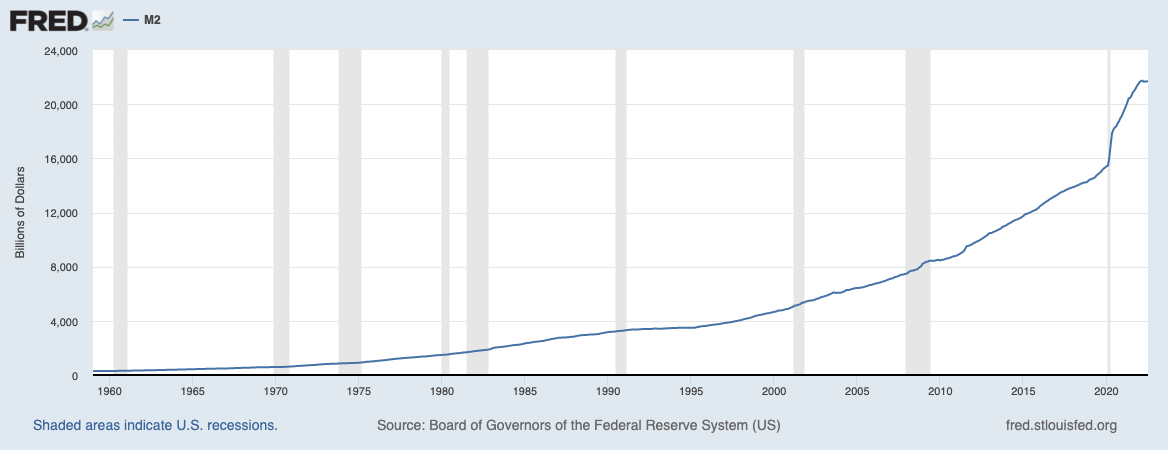
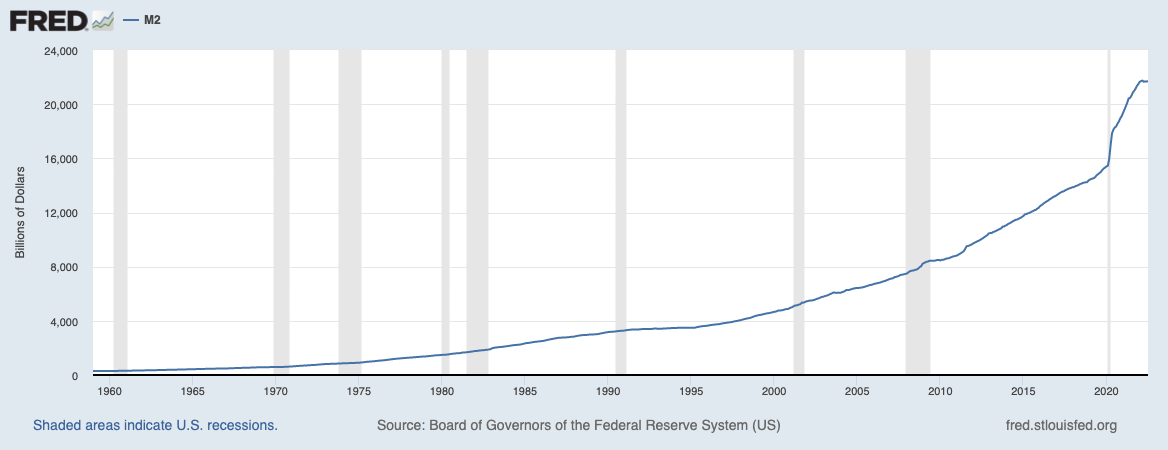
However, it’s important to understand that bitcoin is a hedge against the dilution and expansion of money supply. When monetary policy contracts, as it has recently over the last few months, this will put downward pressure on the value of all assets.
Over a longer period of time you can see that money supply really does nothing but go up. This will only continue given the amount of debt in the global system, something many others have written about.
Steven Lubka has a nice write-up on the "True Meaning of Inflation" for bitcoin, which covers the above and more in depth.